


Genuine Leather vs Faux Leather: Which Is Better for Your Business?
Chandan Kumar
Sep 25, 2026 · 6 min read
If you sell bags, wallets, accessories or corporate gifts, one of your first decisions is the material. Genuine leather vs faux leather is not just a question of price. It affects your product quality, brand image, customer reviews, returns and profit margins. This guide compares both materials clearly so you can choose what suits your business, your customers and your budget.
What Is Genuine Leather?
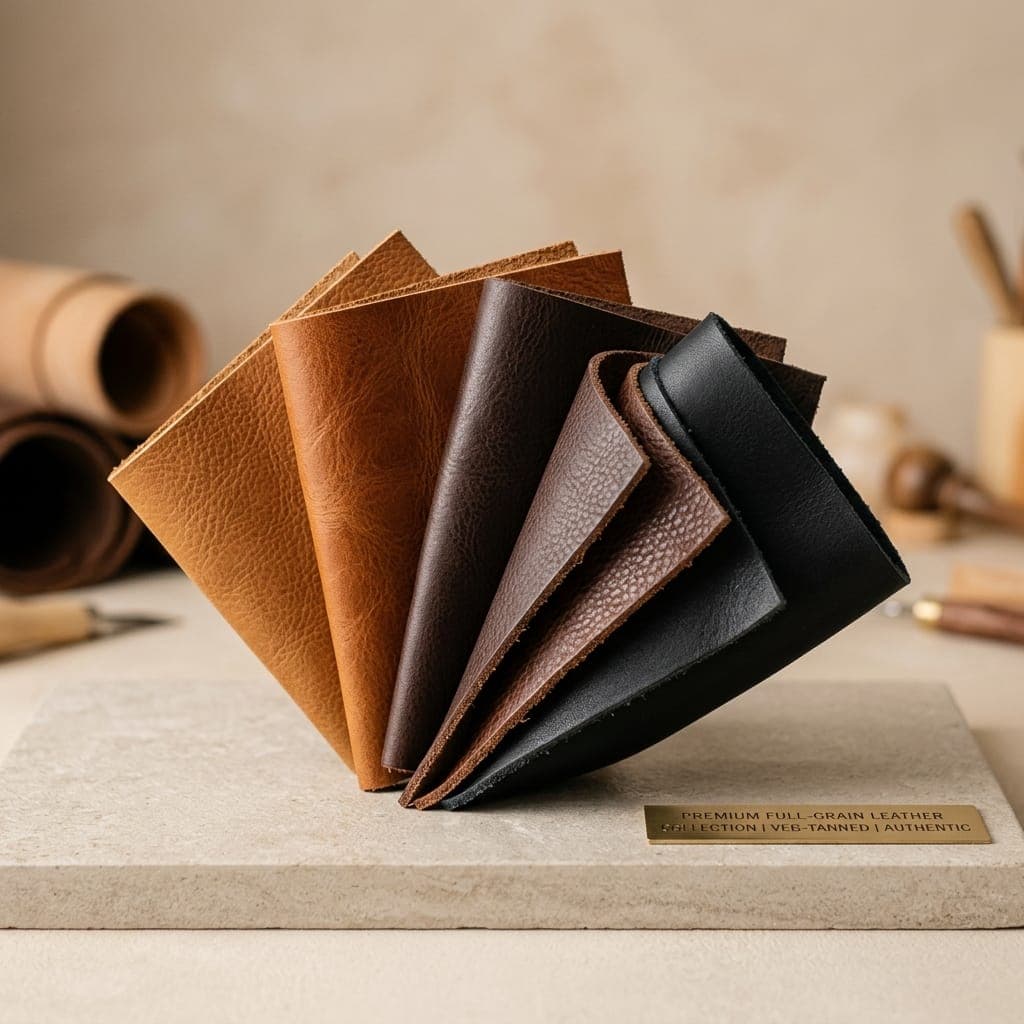
Genuine leather is made from animal hide, most commonly cow, that has been tanned to make it durable. In the market, “genuine leather” is used in two ways: as a general term for real leather, and as a specific lower grade. The main grades are:
- Full-grain leather: The top grade. It keeps the natural surface of the hide and develops a rich patina over time.
- Top-grain leather: The surface is lightly sanded for a smoother, more uniform look.
- Genuine leather (as a grade): Real leather from lower layers of the hide, usually with a finish added on top.
Always ask suppliers for the exact grade in writing.
What Is Faux Leather?
Faux leather, also called synthetic leather or artificial leather, is man-made. It usually has a fabric base with a plastic coating. The two common types are:
- PU (polyurethane) leather: Softer and more flexible, and widely used in bags and accessories.
- PVC (polyvinyl chloride) leather: Stiffer and more water resistant, but less breathable.
“Vegan leather” is a marketing term for animal-free leather alternatives. Most of it is PU-based, though some newer options use plant-based materials.
Genuine Leather vs Faux Leather: Side-by-Side Comparison
| Factor | Genuine Leather | Faux Leather |
|---|---|---|
| Durability | Long lasting with proper care | Shorter lifespan; coating can crack or peel over time |
| Look and feel | Natural grain, rich texture, unique variations | Uniform, consistent pattern |
| Ageing | Develops a patina and often looks better with age | Tends to wear out rather than age gracefully |
| Breathability | Breathable | Less breathable |
| Cost (per unit) | Higher | Lower |
| Repairability | Can often be conditioned or repaired | Hard to repair once the coating damages |
| Consistency in bulk | Natural variation between hides | Very consistent across batches |
| Animal-free | No | Yes |
| Perceived value | Premium | Budget to mid-range |
Advantages of Genuine Leather for Business
- Premium positioning: Genuine leather supports higher prices and a luxury brand image.
- Longer product life: Durable products usually mean fewer complaints and fewer returns.
- Customer trust: Many buyers specifically search for real leather and are willing to pay more for it.
- Strong for gifting: Corporate buyers prefer genuine leather for gifts because it feels valuable.
- Repeat business: Quality products help build loyal customers.
Things to consider: Higher upfront cost, natural variation between pieces, and the need for supplier verification to ensure the grade you were promised.
Advantages of Faux Leather for Business
- Lower cost: A good option for budget ranges and high-volume, price-sensitive markets.
- Consistent appearance: Colours and finishes are uniform, which helps with large matching orders.
- Animal-free appeal: It suits customers who avoid animal products.
- Easy to produce in many colours and prints: Useful for trend-driven, fast-fashion items.
Things to consider: Shorter lifespan, a more “synthetic” feel, and higher risk of peeling or cracking, which can lead to returns and negative reviews. Faux leather also does not carry the same premium perception.
Which Is Better for Your Business?
There is no single right answer. It depends on your market and goals.
Choose genuine leather if:
- You are building a premium or luxury brand
- You sell corporate gifts or executive accessories
- You want long-lasting products and repeat customers
- You target export buyers who value quality materials
Choose faux leather if:
- You serve a budget-focused or trend-driven market
- You need low prices and large matching batches
- Your customers prefer animal-free products
- You are testing a new design with lower risk
Consider offering both: Some businesses run a premium genuine leather range and a lower-priced faux range to reach different customer groups. Keep the two clearly separated so customers always know what they are buying.
Cost vs Value: Think Beyond the Price Tag
A cheaper material is not always the cheaper choice. When comparing, look at:
- Cost per use: A product that lasts longer gives better value over time.
- Return and complaint rate: Peeling or cracking products can cost you more than you saved.
- Brand reputation: Quality issues affect reviews and repeat orders.
- Margins: Premium pricing on genuine leather can offset the higher material cost.
What About Sustainability?
This topic is more complex than it looks, so avoid one-sided claims:
- Leather is a by-product of the meat industry, and a well-made leather product can last for years. Tanning, however, needs responsible practices, so ask about certifications such as Leather Working Group (LWG) where relevant.
- Faux leather is animal-free, but most types are plastic-based and do not last as long, which can mean more waste over time.
- Plant-based alternatives are growing, but options vary in quality and availability.
Whichever material you choose, be honest in your marketing and avoid unproven environmental claims.
How to Tell Genuine Leather from Faux Leather
- Grain: Real leather has small natural variations. A perfectly uniform pattern can indicate synthetic material.
- Edges: Real leather has a fibrous edge. Faux leather often shows a fabric or plastic layer.
- Smell: Real leather smells natural and earthy. A strong chemical smell is a warning sign.
- Feel: Real leather is warm and slightly stretchy, and wrinkles naturally when pressed.
Labelling and Honest Selling
Whatever you sell, label it accurately. Do not describe faux leather as genuine leather. Labelling rules differ by country, so check the requirements of your target market, especially for exports. Honest labelling protects your brand and builds long-term trust with buyers.
Frequently Asked Questions
Is genuine leather better than faux leather?
For durability, premium feel and long-term value, genuine leather is usually the better choice. Faux leather works well for low-budget, trend-based or animal-free ranges.
Which lasts longer, real leather or faux leather?
Real leather generally lasts much longer with proper care, while faux leather coatings can crack or peel over time.
Is genuine leather the same as full-grain leather?
No. Full-grain is the highest quality grade, while “genuine leather” often refers to a lower grade of real leather. Always confirm the grade.
Is faux leather cheaper to buy in bulk?
Usually yes, per unit. But consider durability, returns and brand perception before deciding on price alone.
Can I sell both genuine and faux leather products?
Yes, many businesses do. Label each range clearly so customers understand what they are buying.
Which is better for corporate gifting?
Genuine leather is usually preferred, as it gives a premium, long-lasting impression.
Conclusion
Genuine leather offers durability, premium appeal and long-term value, while faux leather offers low cost, consistency and an animal-free option. The better choice depends on your brand, your customers and your margins. If you aim for quality and repeat business, genuine leather is usually the stronger investment.
Looking for premium genuine leather handbags, slim essentials or corporate gifting products? Contact CORRISTA today for catalogues, samples and bulk pricing.
Enjoyed this read? Subscribe.
Discover deep-dive tannery metrics, wholesale supply updates, and luxury craftsmanship guides directly from our master workshop in Agra.
Written by Chandan Kumar
Director of Tannery & Leathercraft
Updated
Oct 15, 2026
Related articles

Formal vs. Casual Leather Belts: A Buyer’s Guide to Building the Right Collection

Leather Belt Quality Checklist: What Wholesale Buyers Should Inspect
